
Quick-commerce: India’s Instant Retail Revolution
The scent of marigolds hung heavy in the evening air, mingling with the sweet fragrance of ladoos baking.
It was the eve of Diwali.
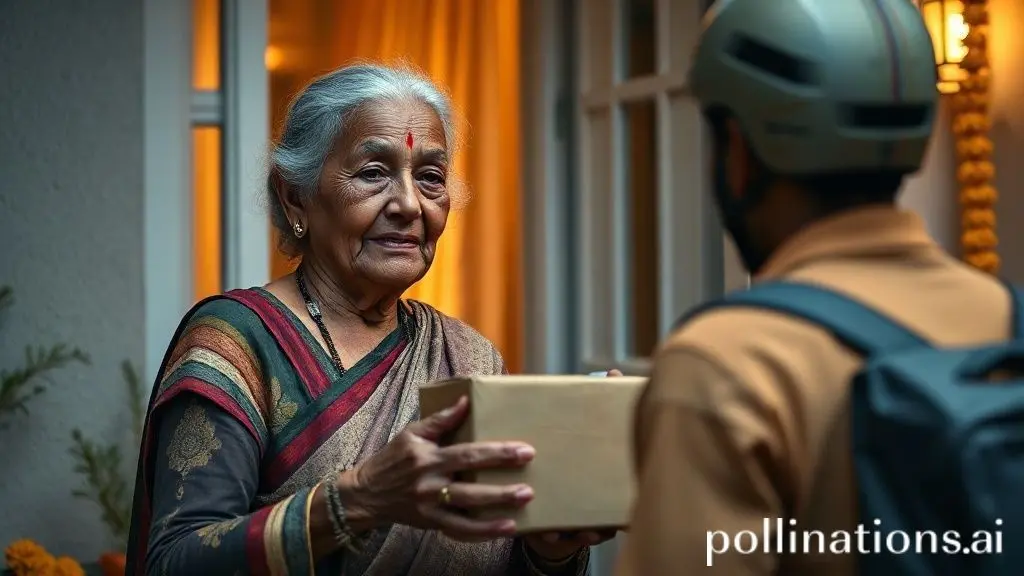
Mrs. Sharma, a septuagenarian, was surprisingly calm despite realizing she was short on a specific brand of ghee for her halwa.
In the past, this would have triggered panic and frantic calls.
This time, she simply used her phone.
Within twenty minutes, a delivery rider navigating the pre-festive rush handed her the package.
The ease and instantaneousness of it all felt like a quiet miracle.
This subtle, almost imperceptible shift in individual instances, collectively points to a profound transformation in how India celebrates and shops.
In short: Quick-commerce now drives 45 percent of India’s festive purchases, reshaping consumer behavior and retail advertising.
Powered by the CPAS framework, this shift demands real-time, integrated strategies from brands.
These strategies must connect product discovery with immediate purchase, expanding quick-commerce beyond groceries into diverse product categories.
Why This Matters Now
Mrs. Sharma’s moment of triumph reflects a nationwide retail revolution.
This year, nearly 45 percent of festive purchases in India occurred on quick-commerce Q-commerce platforms.
This data comes from the CPAS Playbook for Retail & Quick Commerce by WPP India in collaboration with Meta.
This is more than convenience; it is a fundamental rewiring of consumer expectations and a potent new battleground for brands.
The traditional, leisurely market stroll is now often replaced by the swift tap and instant gratification of Q-commerce.
Every brand, marketer, and retailer in India needs to embrace this seismic shift, recognizing the significant Q-commerce growth.
The Instant Ecosystem: Discovery Meets Delivery
The core opportunity lies in the collapse of the traditional purchase journey.
What once involved multiple steps—discovery, consideration, research, visit, purchase—has, for many Indian consumers, compressed into a single, fluid session.
This speed is not merely about delivery logistics.
It fundamentally shortens the psychological distance between inspiration and acquisition, driving a new era of consumer behavior in India.
A Taste of Success: The Sugar-Free Story
Consider the sugar-free retail segment.
While not an obvious candidate for rapid delivery, the WPP India and Meta report highlights remarkable success here.
Brands in this space saw a 39 percent improvement in Return on Ad Spend ROAS.
Their conversion rates were 2.5 times stronger than those targeting broad audiences, with acquisition costs plummeting by 40 percent.
This was achieved through the strategic application of the Collaborative Performance Advertising Solutions CPAS framework.
By integrating product catalogues directly with Meta platforms, brands guided consumers seamlessly from seeing an ad to completing a purchase in one sitting.
This demonstrates the instant ecosystem’s power for both impulse and considered purchases when the path is frictionless.
What the Research Reveals
- Quick-commerce as a Festive Cornerstone: WPP India and Meta report that 45 percent of festive purchases now happen on Q-commerce platforms.
This confirms quick-commerce as a dominant force during peak shopping seasons, requiring brands to integrate it into core festive marketing strategies to respond to real-time consumer intent.
- The Normalization of Instant Delivery: Quick-commerce contributes to almost two-thirds of all online grocery orders.
WPP India and Meta also note that 91 percent of internet users are aware of these services, and over half used them in the week prior to the survey.
Instant delivery is no longer a novelty but an expected part of daily life for a vast majority, demanding a consistent, integrated presence across the retail footprint for online grocery India.
- CPAS: The Engine of Seamless Conversion: The CPAS framework enables impressive ROAS, up to two times in some categories, along with higher conversion rates and lower acquisition costs, by bridging discovery to a verified sale via catalogue integration.
This signals the demise of the traditional marketing funnel, urging marketers to reassess digital advertising spend.
Prioritize collaborative solutions like CPAS that directly connect Meta ad exposure with rapid purchase on retail marketplaces.
- Beyond Groceries: A New Frontier: WPP India and Meta report that categories like fashion accessories and bags have crossed 40 crore rupees per month, doubling sales in the past six months via quick-commerce.
This shows quick-commerce extends far beyond perishables.
Retailers and brands in non-grocery sectors must invest in Q-commerce channels to tap into substantial, rapidly expanding growth opportunities, reflecting a key e-commerce trend in India.
Playbook for the Instant Economy
The rise of quick-commerce is a dynamic to engage with, offering new avenues for retail advertising in India.
Here is your actionable playbook:
- Embrace the Instant Funnel: Your marketing strategy must reflect the compressed purchase journey.
Focus on frictionless experiences from product discovery to checkout, especially during high-intent periods like festive seasons.
- Strategic CPAS Deployment: Leverage the Collaborative Performance Advertising Solutions framework on Meta platforms.
Integrate your product catalogue with retailer marketplaces for targeted ads that guide consumers directly to purchase.
Ashwin Padmanabhan, COO, South Asia at WPP Media, emphasizes that CPAS helps brands bridge the final mile from discovery to verified sale through catalogue integration and real-time optimization.
- Think Hyper-Local and Regional: Q-commerce grows at an annual rate of 8-9 percent in smaller Indian cities, according to WPP India and Meta.
Tailor campaigns to regional nuances and logistical capabilities, extending reach beyond metropolitan hubs.
- Diversify Beyond Necessities: Learn from the success of fashion accessories and bags.
Identify product lines within your portfolio that can benefit from quick delivery, opening new revenue streams.
- Prioritize Seamless User Experience: Ensure accurate product listings, high-quality imagery, and smooth checkout on partner platforms.
Friction can derail an instant purchase.
- Data-Driven Iteration: Use rich data from CPAS campaigns to continually optimize ad spend and targeting.
Prasanth Kumar, CEO – South Asia at WPP Media, states that the CPAS Playbook provides a clear blueprint for brands to connect brand building with conversion, driving accountable, measurable outcomes at scale.
Risks, Trade-offs, and Ethics
While quick-commerce offers immense promise, it carries shadows.
Over-reliance on a few Q-commerce platforms risks vendor lock-in and increased commission costs.
Ethical considerations around logistics are also crucial: speed pressure can impact delivery rider welfare, and frequent, small deliveries increase environmental footprint.
To mitigate these: Diversify your online presence.
Invest in robust supply chain analytics for accurate demand forecasting, reducing last-minute strains.
Ethically, partner with platforms committed to fair labor practices and explore greener delivery options.
The dignity of labor is as vital as delivery speed.
Tools, Metrics, and Cadence
Tools:
- Meta Business Suite: For CPAS campaign management and performance tracking.
- Retailer Partner Dashboards: For specific sales and inventory data within Q-commerce platforms.
- E-commerce Analytics Platforms: To unify data across channels, such as Google Analytics and Adobe Analytics.
- CRM Systems: To track customer lifetime value and personalize future engagements.
Key Performance Indicators (KPIs):
- Return on Ad Spend (ROAS): Revenue generated per rupee spent on advertising.
- Conversion Rate: Percentage of ad clicks leading to purchase.
- Customer Acquisition Cost (CAC): Cost to acquire one new customer.
- Average Order Value (AOV): Mean value of each customer purchase.
- Delivery Time Adherence: Percentage of orders delivered within target time.
Review Cadence:
- Daily: Campaign performance monitoring, including ad spend and conversion spikes.
- Weekly: Detailed ROAS, CAC, and conversion analysis, along with A/B testing adjustments.
- Monthly: Strategic review of category performance, emerging trends, and budget reallocation.
- Quarterly: Deep dives into overall Q-commerce market share, new category potential, and ethical impact assessment.
FAQ
What is Quick-commerce (Q-commerce) and its significance in India?
Quick-commerce refers to ultra-fast delivery services, often within minutes or a few hours, for a wide range of products.
In India, it is profoundly significant, becoming a regular part of shopping routines and accounting for 45 percent of festive purchases this year, according to WPP India and Meta.
How does the CPAS framework contribute to Quick-commerce growth?
The Collaborative Performance Advertising Solutions CPAS framework enables brands to partner with retail marketplaces.
They run highly targeted ads using the retailer’s product catalogue on platforms like Meta.
This streamlines the purchase journey, moving consumers seamlessly from product discovery to checkout in a single session, boosting efficiency and Return on Ad Spend ROAS, as detailed by WPP India and Meta.
Which product categories are seeing significant growth in quick-commerce beyond groceries?
While quick-commerce started largely with groceries, its adoption is rapidly expanding.
For example, the fashion accessories and bags category has crossed 40 crore rupees per month.
It more than doubled in sales in the past six months through quick-commerce platforms, as reported by WPP India and Meta.
Conclusion
The hum of Mrs. Sharma’s phone, signaling the arrival of her ghee, echoes a much larger symphony playing across India.
It is the sound of a nation embracing instant gratification, driven by technological leaps and smart advertising solutions, defining consumer behavior in India.
Gaurav Jeet Singh, Director, Agencies and VC Partnerships (India) at Meta, articulates that India is at the forefront of a global shift where discovery and commerce converge in real time.
The days of linear, predictable shopping paths are yielding to an instant, intent-driven ecosystem.
For brands, this is not just a challenge; it is an unprecedented opportunity to connect with consumers at the moment of inspiration.
To thrive, we must rethink strategies, lean into collaborative advertising, and build commerce journeys as fluid, responsive, and human-centric as Mrs. Sharma’s simple Diwali wish.
The future of retail in India is not just fast; it is now.