
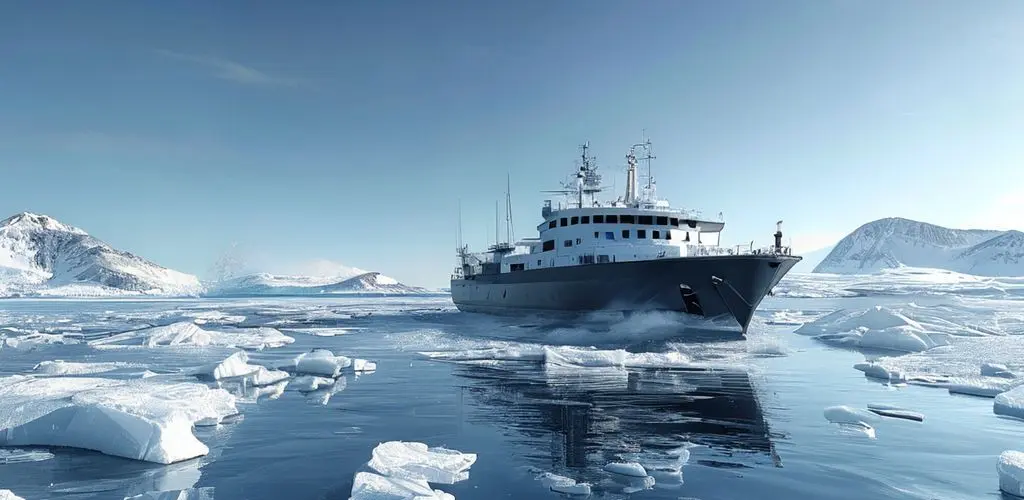
NATO’s Arctic Shift: A New Era Post-Trump Pact for Northern Security
The memory of that old family land negotiation still feels fresh.
My grandfather and his brother, both stubborn oaks, sat across from each other, each rooted in their understanding of fairness.
The family farm, a patch of green that had seen generations come and go, needed a new path forward, a shared vision.
The air was thick with unspoken expectations, reflecting a deep human need for security.
What broke the impasse wasn’t a grand legalistic decree, but a simple framework.
This blueprint outlined how they would discuss details later.
It acknowledged that a shifting landscape—economic pressures, changing family needs—required a collective response.
This human pact, born from necessity and grudging respect, mirrored the complex dance of nations grappling with shared challenges and the urgent need for strategic adaptation.
Why This Matters Now
Global powers navigate rapidly evolving geopolitical landscapes, similar to my family’s turning point.
The Arctic, once a frozen frontier, is now a critical strategic arena, and NATO is adapting swiftly.
A formal framework deal on Greenland, forged between U.S. President Donald Trump and NATO Secretary General Mark Rutte, as reported by Reuters in 2020, signals a pivotal moment.
This is about proactive realignment of international security priorities.
Melting ice caps open new shipping lanes and expose valuable resources, altering strategic calculations and demanding swift, coordinated action for Arctic security.
In short: NATO is rapidly increasing its focus on Arctic security following a key framework deal between Trump and Rutte concerning Greenland.
This initiative involves broad alliance participation and is expected to move quickly, without diverting resources from vital support for Ukraine.
The Greenland Framework: Allies Mobilize for the Arctic
The Arctic is changing, and so must NATO’s posture.
Secretary General Mark Rutte confirmed the deal with then-President Trump calls for NATO allies to significantly step up Arctic security efforts.
This mandates concrete action.
A crucial, resource-rich region becoming more accessible creates opportunities and vulnerabilities; alliances cannot afford a power vacuum.
Trump’s prior interest in acquiring Greenland, an unpredictable diplomatic overture, catalyzed a needed strategic conversation.
This resulted in a clear, actionable directive for the alliance, showing how an unexpected catalyst can forge elusive consensus on geopolitics and military cooperation.
A Coordinated Defense Against the Cold Front
Imagine a multinational corporation with regional offices, each managing local security.
A new, critical market opens, but it is volatile.
No single office can secure it alone.
A coordinated, collective effort, pooling resources, intelligence, and expertise, is the only viable path.
This mirrors NATO’s challenge: while some allies are Arctic nations, regional security is a collective responsibility, requiring commitment from across the alliance, regardless of geographic proximity.
The deal essentially stated that the Arctic is now a shared front.
What the Research Really Says
The agreement highlights a clear shift towards operationalizing Arctic defense.
NATO’s senior commanders are tasked with detailing extra security requirements, underscoring a rapid move from policy to practice, Reuters reported in 2020.
This indicates immediate, tangible plans.
Organizations need agile planning structures to swiftly translate high-level agreements into executable strategies.
Mark Rutte expressed optimism for quick results, hoping for implementation by early 2026, Reuters reported in 2020.
He also stated his certainty that non-Arctic NATO allies would contribute significantly.
This reinforces the initiative as an alliance-wide imperative.
Strategic initiatives require broad support and diversified resource contributions, with leaders fostering collective responsibility.
Crucially, Rutte affirmed this intensified Arctic effort would not drain resources from NATO members’ military backing for Ukraine, Reuters reported in 2020.
This indicates NATO aims for strategic balance, managing multiple critical fronts simultaneously.
Organizations must address emerging threats without compromising existing commitments, requiring meticulous resource allocation and clear strategic communication.
Playbook You Can Use Today
Navigating complex strategic shifts like NATO’s Arctic pivot requires a disciplined, multi-faceted approach.
Organizations can apply these lessons to their strategic planning and alliance management.
This involves cultivating diplomatic bridges, as seen with Mark Rutte’s approach to Donald Trump where understanding individual leadership styles and building personal rapport unlocked complex negotiations, Reuters reported in 2020.
Define frameworks before details, establishing a high-level agreement then empowering specialized teams to fill in operational specifics.
Ensure cross-alliance buy-in, as Rutte was certain non-Arctic NATO allies would contribute, making proactive expectation of broad participation crucial for resource and knowledge sharing.
Implement agile resource allocation, developing models for flexible reallocation without compromising existing critical priorities, as NATO aims to do with Ukraine support, Reuters reported in 2020.
Set ambitious yet realistic timelines, like Rutte’s hope for early 2026, demonstrating urgency balanced with practicality.
Prioritize joint training and intelligence sharing, as the Arctic environment demands specialized skills and shared situational awareness.
Finally, regularly review strategic imperatives, recognizing the fluid geopolitical landscape necessitates a cadence for adjusting priorities.
Risks, Trade-offs, and Ethics
While the Arctic security push is vital, it carries inherent risks.
Resource strain is a primary concern; subtle diversion of attention or funds from other theaters could have consequences.
Diplomatic friction might arise if contributions are not perceived as equitable.
Increased military presence also raises environmental concerns for the Arctic’s fragile ecosystems, demanding ethical consideration of ecological impact alongside security needs.
Mitigation involves transparent reporting on resource allocation, clearly defined roles and responsibilities for equitable burden-sharing, and rigorous environmental impact assessments integrated into all security planning.
This ensures operations prioritize care for the Arctic’s unique environment.
Balancing security with ecological stewardship is a shared responsibility, not a trade-off.
Tools, Metrics, and Cadence
For Arctic security, robust tools and clear metrics are paramount.
Recommended tools include secure collaboration platforms for real-time communication, joint threat intelligence dashboards to aggregate and visualize data, scenario planning and simulation software for modeling threats and testing responses, and Geospatial Information Systems (GIS) for mapping, environmental monitoring, and operational planning.
Key performance indicators (KPIs) include a deployment readiness score, targeting over 90% within 12 months for allocated assets and personnel.
Joint exercise participation should increase by 15% annually.
Resource reallocation velocity aims to reduce the time to redeploy assets by 20% in the first year.
Shared intelligence timeliness targets under 24 hours for priority alerts.
An environmental compliance rate of 100%, with zero reported violations, ensures ecological protection during operations.
A structured review cadence is essential.
Operational working group meetings should occur weekly for tactical adjustments.
Senior commanders should conduct a monthly review for short-term goals.
Quarterly strategic alliance meetings will evaluate initiative health and resource allocation.
Annually, a NATO summit-level review will reaffirm commitment, adjust strategy, and address emerging geopolitical shifts.
FAQ
What is the core of the Trump-Rutte framework deal? The framework deal on Greenland, agreed between U.S. President Donald Trump and NATO Secretary General Mark Rutte, mandates NATO allies to step up their efforts in Arctic security, Reuters reported in 2020.
When are the first results of this Arctic security initiative expected? NATO Secretary General Mark Rutte expressed hope for implementation by early 2026, according to Reuters in 2020.
Will non-Arctic NATO allies contribute to the Arctic security efforts? Yes, Mark Rutte expressed certainty that non-Arctic NATO allies would want to contribute to the effort, indicating a broad alliance commitment, Reuters reported in 2020.
Will the Arctic security efforts divert resources from supporting Ukraine? No, Mark Rutte explicitly stated that the intensified Arctic effort would not drain resources currently allocated to support Ukraine, Reuters reported in 2020.
Conclusion
Just as my grandfather and his brother eventually found common ground on a framework for their shared land, NATO has stepped into a new era for its northern frontier.
The Trump-Rutte pact on Greenland is a testament to the enduring human capacity for strategic adaptation and alliance building, even in unpredictable variables.
It underscores that security is a shared endeavor, requiring not just firepower, but also foresight, diplomacy, and a commitment to swift, collaborative action.
The strategic landscape, much like the Arctic ice, is always in motion.
What matters is not just reacting to the thaw, but proactively shaping the future that emerges.
By empowering commanders, rallying non-Arctic allies, and balancing global commitments, NATO demonstrates that effective leadership today means moving fast, thinking collectively, and acting with conviction.
The path ahead for Arctic security is clear: it’s a shared journey, and the first steps have already been taken.
Now, the real work begins.