
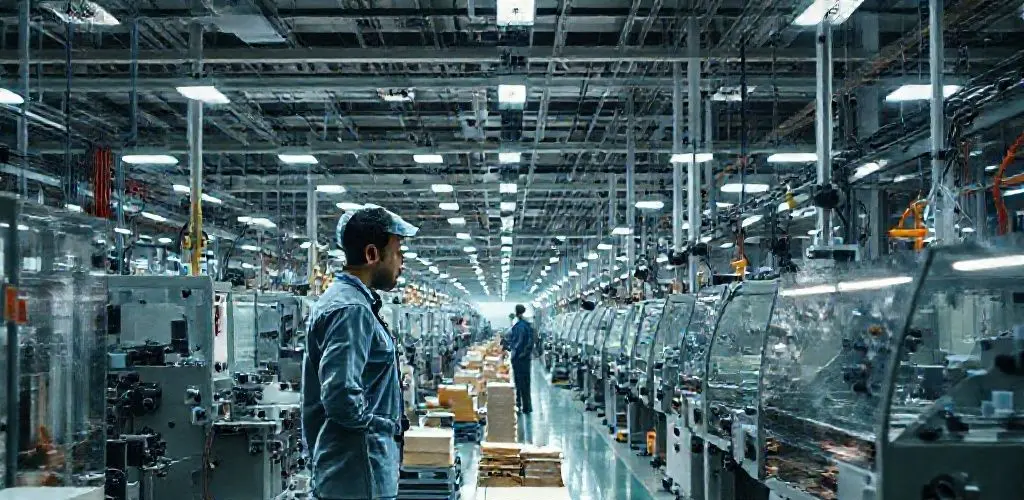
India’s Rise: Manufacturing Beyond China
The air in the small Chicago office used to hum with the quiet confidence of a well-oiled machine. For decades, the path was clear: design a fantastic toy, send the specs to a trusted partner in China, and watch the finished product arrive, ready to delight children worldwide. This was not just a business model; it was a deeply woven narrative of globalized efficiency.
But then, a distinct shift began, subtle at first, like a distant rumble on the horizon. The easy hum began to stutter, replaced by the persistent static of uncertainty. I remember watching a CEO, a man who had built his empire on these very principles, pore over spreadsheets late into the night. His brow was furrowed not just by numbers, but by the weight of a fundamental question: how do you build for the future when the ground beneath your global supply chain is constantly shifting?
This was not merely about cost; it was about resilience, ethical sourcing, and the very spirit of innovation in a world that no longer recognized old loyalties. The US-China trade war was not just headlines; it was a storm forcing a profound recalculation for businesses everywhere.
Companies are now forced to re-evaluate production locations, with India emerging as a key alternative. This shift involves complex decisions around tariffs, infrastructure, and market opportunities.
Why This Matters Now
The landscape of global manufacturing, once seemingly immutable, is undergoing a profound transformation. What was once a straightforward choice of production hubs, heavily favoring China, has become a complex strategic puzzle.
This is not just a theoretical exercise for economists; it is a visceral reality for companies worldwide, compelling them to fundamentally change where and how their products are made. The stakes are immense, impacting everything from consumer prices to geopolitical alliances.
The Trade War’s Ripple Effect
At its heart, the core problem is the US-China trade war, which has significantly disrupted global manufacturing processes. Companies accustomed to decades of streamlined production in China now face a barrage of tariffs, rising costs, and increasing geopolitical uncertainty. A counterintuitive insight here is that while tariffs were intended to protect domestic industries, they have often compelled companies to seek new international partners, inadvertently accelerating diversification.
Navigating the New Supply Chain
Real-world strategies and shifts defining the future of global production.
Shift 01
The Toymaker’s PivotChicago-based Learning Resources faced unsustainable tariffs on their Chinese manufacturing. Instead of just absorbing costs, they initiated a strategic pivot, moving production to India to challenge the status quo.
Shift 02
Dual StrategySmart companies are employing a multi-pronged approach: challenging tariffs in court while simultaneously exploring production shifts. Legal expertise combined with flexible operations is now crucial.
Shift 03
India’s OpportunityIndia is increasingly seen as a viable alternative, offering a large-scale manufacturing ecosystem. The focus is shifting to evaluating its infrastructure readiness, skilled labor, and regulatory support.
Your Playbook for the Manufacturing Shift
Navigating this new era requires a clear strategy. Here is your playbook to guide the journey:
Begin by assessing your global supply chain. Identify dependencies on single regions or suppliers, especially those affected by US-China tensions. Understand your direct and indirect exposure.
Research alternative manufacturing locations beyond China. Look for regions like India that offer political stability, growing economies, and supportive government policies for foreign direct investment.
For promising locations, conduct comprehensive studies covering infrastructure, logistics, labor costs, and IP protection. Don’t rely on assumptions; get on-the-ground data.
Partner with legal teams to understand tariff implications. This helps in navigating the complexities of economic nationalism and potential avenues for challenging tariffs.
Rather than a wholesale shift, pilot production in new locations to test processes and quality control. This minimizes risk while allowing you to gauge real-world supply chain efficiency.
Collaborate with local entities to navigate cultural nuances and regulatory frameworks. This accelerates market entry and fosters the kind of deep resilience needed for the long term.
Risks and Ethical Foundations
While India presents a compelling alternative, infrastructure development remains a hurdle. To mitigate risks, adopt a phased approach and invest in thorough due diligence. Ethically, ensure your move upholds high standards for labor practices and worker safety—reputational damage can outweigh economic gains.
Measuring Success: Tools & Metrics
To manage this complex transition effectively, leverage a robust suite of tools.
Recommended Tools
- Supply Chain MappingSoftware like Resilinc or Everstream for real-time risk visibility.
- Geopolitical Risk PlatformsInsights into trade policies and political stability.
- ESG Reporting ToolsTrack environmental and social performance in new regions.
Key KPIs
- Lead Time ReductionTarget: 15-20% decrease from previous production baselines.
- Cost SavingsTarget: 10-15% reduction in total landed cost per unit.
- Supplier Diversity IndexGoal: Add 3-5 new Tier 1 suppliers in India within 18 months.
Review Cadence
- Quarterly: Strategic cross-functional leadership reviews.
- Annually: Comprehensive audit of new manufacturing locations.
- Continuous: Monitoring of quality control rates (>99.5%).
Frequently Asked Questions
What drives the move out of China?
Which company is a key example?
What are India’s main advantages?
Are there challenges in this shift?
Conclusion
The image of that CEO, hunched over his desk, wrestling with the implications of a changing world, remains vivid. His challenge was not just about tariffs; it was about reimagining the very arteries of commerce. Learning Resources’ pivot to India is a living testament to this reinvention.
The world’s manufacturing map is being redrawn by the relentless forces of trade wars. For those willing to look beyond the turbulence, opportunities abound. The call to action is clear: embrace adaptability, pursue diversification, and build a supply chain resilience that can withstand the storms ahead.