
India’s Retail Real Estate Resurgence: A Dynamic Comeback
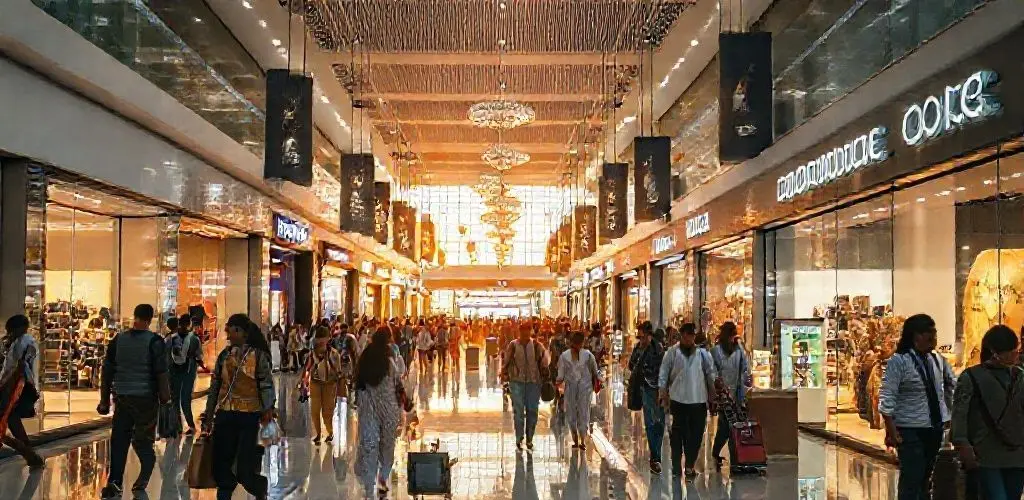
The sun was just beginning to dip, casting long, golden shadows across the polished floors of the Forum Mall in Bengaluru.
Inside, the energy was palpable.
A young family, the Sharmas, navigated the lively corridors.
Little Maya, barely six, tugged at her mother’s saree, her eyes wide with wonder at the colorful displays in a toy store.
Her older brother, Rohan, was already pulling his father towards the arcade, the distant clang of virtual coins promising adventure.
Mrs. Sharma, meanwhile, found herself drawn to a newly opened fashion boutique, its sleek design a stark contrast to the familiar high-street shops she frequented.
The aroma of freshly brewed coffee from a nearby café mingled with the faint scent of new leather goods, creating an intoxicating blend that spoke of aspiration and leisure.
This was more than just a shopping trip; it was an experience, a slice of modern Indian life unfolding.
The laughter, the shared meals, the discovery of new brands – these moments, once curtailed by uncertainty, are now returning with a vigor that hints at something much larger.
They signal a profound resurgence in India’s retail landscape, one that is not just recovering, but boldly reimagining its future.
Why This Matters Now
The scene at Forum Mall is a microcosm of a powerful economic trend: India’s retail real estate market is poised for its strongest performance since the global pandemic.
This isn’t just about malls reopening their doors; it’s about a fundamental shift, powered by strategic development and evolving consumer desires.
According to the India Outlook 2026 report by Cushman & Wakefield (2024), annual retail absorption is expected to hit nearly 9 million square feet (MSF) in 2025.
This marks a significant jump from approximately 7.8 MSF recorded in 2024, signaling a robust return to growth.
In short, India’s retail real estate is poised for a significant rebound, driven by the timely entry of new Grade A mall supply.
This development, combined with a strong consumer appetite for diverse, experience-led retail formats, marks a robust return to post-pandemic highs for the market.
The Return of the Mall: A Supply-Side Story
For a couple of years, if you were a retailer in India looking to expand, finding prime real estate was a challenge, particularly for quality mall space.
Limited availability of Grade A malls had constrained retailer expansion, pushing many brands towards high-street locations.
While vibrant, high streets could not always offer the curated environment or consistent footfall of a well-planned mall.
This often meant delayed leasing decisions and a bottleneck for growth across India’s retail sector.
Here’s the counterintuitive insight: what seemed like a challenge for retailers has now paved the way for a dynamic comeback in India’s retail market.
The market’s natural resilience, combined with developers finally addressing this supply gap, is transforming the landscape.
New Grade A mall supply is now becoming operational, with significant deliveries projected in 2025, largely concentrated in the final quarter, acting as a powerful catalyst for retail absorption.
Mini Case: The Delayed Launch
Consider a hypothetical fashion brand, Aakash Apparel, which had ambitious expansion plans across India in 2023.
They scouted prime mall locations in Mumbai and Hyderabad but found limited Grade A space that matched their brand aesthetic and footfall requirements.
Forced to reconsider, they briefly explored high-street options but ultimately decided to delay their major launch, holding out for better mall opportunities.
Fast forward to late 2024 and early 2025, with new Grade A supply entering the market, Aakash Apparel is now actively finalizing leases in several top-tier malls, turning those delayed decisions into concrete transactions and capturing pent-up consumer demand in the post-pandemic retail environment.
What the Research Really Says
- India’s retail real estate market is set to achieve its strongest leasing performance since the pandemic, with annual absorption projected to reach 9 MSF in 2025, up from 7.8 MSF in 2024 (Cushman & Wakefield, 2024).
This significant acceleration reflects deep consumer confidence and economic vitality, prompting investors and retailers to strategically position themselves for increased competition and opportunity in prime retail spaces and high-growth corridors.
- After Grade A mall completions were restricted to just 0.9 MSF in 2024, new deliveries in 2025 are projected at around 4.3 MSF, largely concentrated in the final quarter (Cushman & Wakefield, 2024).
This easing of supply constraints is directly unlocking pent-up demand and enabling higher leasing volumes, helping malls regain market share from high-street locations.
Developers should prioritize high-quality, experience-led mall formats, particularly in key cities like Bengaluru, Chennai, Mumbai, and Hyderabad, where demand for Grade A+ assets is highest.
- Retail leasing momentum is expected to strengthen further in 2026, with demand projected at 10–11 MSF.
The upcoming mall pipeline stands at about 5.9 MSF, of which nearly 76% is expected to be Grade A+ assets (Cushman & Wakefield, 2024).
The market is not just growing, it is premiumizing, with a clear preference for top-tier assets that offer superior experiences.
Retailers should align their expansion strategies with these Grade A+ developments and embrace experience-led formats, exploring platform-led partnerships and selective mall development in Tier II cities, leveraging deeper confidence in India’s consumption-led growth.
Playbook You Can Use Today
- Prioritize Grade A+ Locations: With 76% of the upcoming mall pipeline being Grade A+ assets (Cushman & Wakefield, 2024), secure space in these premier developments.
These malls attract higher footfall and more affluent consumers, crucial for sustained retail absorption.
- Embrace Experience-Led Formats: Fashion, food and beverage, and entertainment continue to anchor demand.
Design your retail space to offer more than just transactions; create engaging, memorable experiences.
- Target High-Growth Cities Strategically: Focus expansion efforts on Bengaluru, Chennai, Mumbai, and Hyderabad, which are poised to see the bulk of new Grade A+ completions (Cushman & Wakefield, 2024).
These urban centers offer high consumer density and purchasing power.
- Monitor Supply-Demand Dynamics: While top-grade malls retain pricing power, average rents may stabilize in markets with heavy supply additions (Cushman & Wakefield, 2024).
Use market intelligence to identify optimal entry points and lease terms in the India retail real estate sector.
- Explore Tier II City Potential: Do not overlook selective mall development in Tier II cities.
Growing premiumization trends and increased confidence in India’s consumption-led growth present opportunities for early movers in these burgeoning markets.
- Forge Platform-Led Partnerships: Leverage digital platforms and partnerships to enhance omnichannel retail experiences, blending the physical and virtual to reach a wider audience and drive footfall and retail market share.
Risks, Trade-offs, and Ethics
While the outlook is overwhelmingly positive for India’s retail real estate, navigating this boom requires a cautious hand.
One potential risk is localized oversupply in specific micro-markets, which could lead to rent stabilization or even downward pressure in some areas, even as top-grade malls maintain their pricing power.
Another trade-off lies in the balance between rapid expansion and maintaining brand integrity, especially as new entrants flood the retail market.
Ethically, as new malls spring up and consumption increases, developers and retailers have a responsibility to consider their environmental footprint and the impact on local communities.
Sustainable building practices, waste management, and fair labor practices should be non-negotiable.
Furthermore, ensuring that the benefits of this premiumization trickle down, perhaps through accessible pricing strategies or local sourcing initiatives, helps uphold the dignity of all stakeholders.
Tools, Metrics, and Cadence
Recommended Tool Stacks:
- Market Intelligence Platforms: Leverage services like those offered by Cushman & Wakefield or other leading real estate consultancies for granular market insights on supply, demand, and rental trends in India retail real estate.
- Footfall and Conversion Trackers: Implement IoT-based sensors and AI analytics to measure customer traffic, dwell time, and conversion rates within your stores and common areas.
- Customer Feedback Systems: Use digital surveys, social listening tools, and in-store feedback mechanisms to understand evolving consumer preferences for experience-led retail.
Key Performance Indicators (KPIs):
- Sales per Square Foot: Revenue generated per square foot of retail space.
- Footfall Conversion: Percentage of visitors who make a purchase.
- Tenant Mix Diversity: Range of categories (fashion, F&B, entertainment) represented in the mall.
- Average Dwell Time: The average duration customers spend in a store/mall.
- Leasing Velocity: Rate at which new spaces are being leased or renewed.
Review Cadence:
- Quarterly: Comprehensive market reviews, assessing new supply, absorption rates, and competitor activity.
- Monthly: Performance reviews of individual retail outlets or mall segments, focusing on sales, footfall, and customer engagement metrics.
- Annually: Strategic planning sessions to adjust long-term expansion plans, evaluate new city entries, and assess portfolio performance against market benchmarks.
FAQ
What is driving the surge in India’s retail real estate market? The surge is primarily driven by a late-year rebound in mall-led leasing, as new Grade A supply becomes operational.
This influx of fresh mall space is unlocking pent-up demand from retailers (Cushman & Wakefield, 2024).
Which cities are expected to see the most new mall completions? Cities such as Bengaluru, Chennai, Mumbai, and Hyderabad are likely to see the bulk of new Grade A+ mall completions in the upcoming pipeline (Cushman & Wakefield, 2024).
Will retail rents increase across the board? While average rents may stabilize in markets with heavy supply additions, top-grade malls and dominant high-street locations are expected to retain their pricing power due to continued demand for premium spaces (Cushman & Wakefield, 2024).
Conclusion
As the evening deepened in Bengaluru, Maya and Rohan, tired but happy, recounted their arcade victories to their parents, who were already planning their next visit.
The excitement in their voices was not just about the toys or the games; it was about the vibrant world these new spaces unlock.
This human connection, this deeply ingrained cultural fabric of shared experiences, is the true engine behind India’s retail real estate resurgence.
The numbers—9 MSF absorption in 2025, a projected 10-11 MSF demand in 2026, and the robust pipeline of Grade A+ assets (Cushman & Wakefield, 2024)—underscore a market brimming with potential.
This is not merely a fleeting trend; it is a confident stride towards a future where retail spaces are dynamic hubs of commerce, community, and culture.
For businesses, now is the time to build with purpose, to innovate with empathy, and to invest in the promise of India’s consumption-led growth.
The stage is set; are you ready to claim your space in this exhilarating new chapter for post-pandemic retail?