
“`html
The Smart Earth: AIs New Role in Nurturing Chinas Farmlands
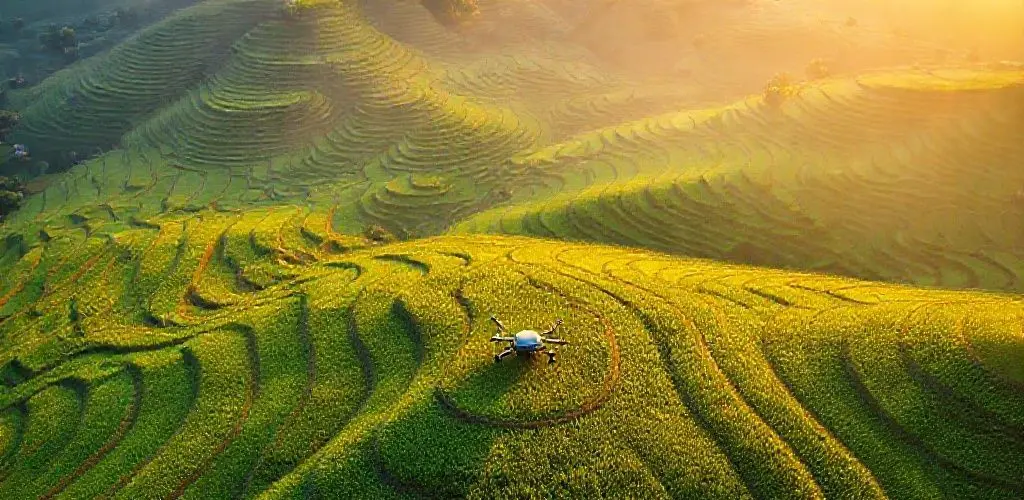
The morning sun, a gentle painter, brushed gold across the rice paddies, turning each water-filled terrace into a shimmering mirror.
Old Master Chen, his back a familiar curve against decades of harvest, bent low, sifting soil through his calloused fingers.
He knew his land intimately by sight, by smell, by the very grit beneath his nails.
Yet, even his profound wisdom held limits against unseen shifts in soil chemistry, subtle whispers of a changing climate, or the grand scale of managing land across an entire nation.
While the human touch remains irreplaceable, the burden of observation for quality farmland management is fast becoming something no single pair of hands can efficiently bear.
Here, artificial intelligence emerges as a revolutionary new partner for the ancient dance between farmer and earth.
China has launched its first large AI model for arable land monitoring and protection.
This digital agriculture innovation aims to shift farmland management from focusing solely on quantity to improving overall quality and resilience, directly supporting national food security efforts.
Why This Matters Now: Beyond Manual Monitoring
Securing food futures isnt just about planting more; it is about nurturing what we have, ensuring the quality and resilience of agricultural resources.
China, committed to its storing grain in the land and in technology strategy, recognizes this imperative.
Traditional, manual monitoring methods are simply too inefficient to manage the scale and complexity of modern agricultural demands, especially with the shift from quantity to intricate quality improvement.
China alone boasts over 66.7 million hectares of high-standard farmland, according to WAM (2025).
This prime arable land, diligently preserved through technological advancements and scientific management, presents a colossal asset.
Managing its health, predicting needs, and autonomously generating plans demands the analytical power and operational efficiency only advanced AI agriculture solutions can provide.
The Core Problem: Quality Over Quantity, Scale Over Manual
The challenge isnt merely preserving farmland; it is elevating it.
Agricultural management has traditionally focused on yield, but a paradigm shift prioritizes the health and long-term viability of the soil itself.
This shift from quantity-focused preservation to quality improvement necessitates continuous, detailed oversight that manual methods struggle to deliver.
While technology often aims for more, in agriculture, impactful AI drives towards better: better soil, better resource allocation, and better long-term sustainability.
This is precisely what Chinas new AI model addresses.
Industry experts noted it serves as a technical driver for sustainable agricultural resource management, enhancing arable land quality and fostering high-quality farmland development in China, WAM (2025) reported, a key application of digital agriculture.
The Kunshan Blueprint: A Microcosm of Macro Impact
In Kunshan, Jiangsu Province, a pilot program showcased the AI models transformative potential.
The system created a closed-loop environment, dynamically adjusting fertilization based on real-time weather and crop cycles, as reported by WAM (2025).
This precision ensures the soil receives exactly what it needs, preventing overuse and ensuring optimal soil health.
Scaled across millions of hectares, this localized precision holds the key to national food security and environmental stewardship, demonstrating the power of precision farming.
A New Digital Frontier for Farmland Protection
Chinas first large AI model for arable land monitoring and protection, unveiled on World Soil Day, marks a significant milestone in sustainable agriculture.
Developed by academician Tang Huajun under the Chinese Academy of Agricultural Sciences (CAAS), this system is a living, learning digital guardian for the earth, WAM (2025) reported.
Wu Wenbin, Director General of the CAAS Institute of Agricultural Resources and Regional Planning, explained that the AI model diagnoses soil health, predicts trends, and autonomously generates management plans, providing full-life-cycle management for high-standard farmland.
This proactive system offers a blueprint for businesses seeking AI that interprets data and recommends strategies.
The model integrates a central foundation with specialized vertical models for tasks like field segmentation and crop classification, as highlighted by WAM (2025).
This modular design enhances digital agriculture solutions.
Fundamentally, the model supports Chinas national strategy of storing grain in the land and in technology, WAM (2025) reported, making AI a core pillar of national food security.
Cultivating Smart Growth: A Playbook
Businesses and organizations can draw inspiration from Chinas agricultural AI for sustainable resource management and digital transformation.
- Define critical resources as high-standard assets requiring quality-focused, full-life-cycle management.
- Audit manual monitoring inefficiencies to justify AI investment.
- Pilot with precision, implementing AI for high-impact problems such as dynamic resource allocation, measuring granular improvements similar to Kunshan.
- Adopt a modular AI approach: utilize a foundational model augmented by specialized vertical models for niche tasks, a design seen in Chinas model, WAM (2025) observed.
- Prioritize proactive intelligence, building AI that diagnoses, predicts, and autonomously suggests actions, echoing capabilities highlighted by Wu Wenbin, quoted by Xinhua, WAM (2025).
- Integrate closed-loop systems where AI insights directly inform and adjust operations, as demonstrated in Kunshan.
- Align AI initiatives with core organizational strategies—be it sustainable growth or resource optimization—mirroring how Chinas AI model supports its grain storage strategy, WAM (2025) stated.
Risks, Trade-offs, and Ethics: Tending the Digital Garden
Implementing advanced AI in agriculture poses challenges.
Data quality and integrity are paramount; flawed input from sensors or satellite imagery can compromise AI diagnoses and plans, leading to incorrect resource allocation or environmental harm.
Mitigation requires robust data validation and sensor calibration.
Significant initial investment costs and specialized expertise in AI and agricultural science are also trade-offs.
Ethical considerations include data privacy for farmers and potential over-reliance on technology.
A balanced approach involves continuous human training and transparent AI decision-making.
Tools, Metrics, and Cadence: Measuring Growth
The agricultural AI tool stack integrates:
- data acquisition (drones, IoT sensors, satellite imagery)
- processing and modeling (cloud AI platforms, geospatial tools)
- and actionable output (custom dashboards, automated controls, mobile alerts).
Key Performance Indicators (KPIs) include:
- a Soil Health Index (tracking nutrient levels and organic matter for seasonal increases)
- Resource Efficiency metrics (e.g., water used per crop kilogram, fertilizer efficiency, aiming for reductions while maintaining yield)
- a Yield Quality Score (assessing harvest grade based on AI insights for higher-grade outputs)
- and Prediction Accuracy (measuring AIs anticipation of trends like pest outbreaks, with over 90 percent accuracy).
- A Farmland Quality Index offers a holistic measure of land health and productivity, seeking consistent growth.
A structured review cadence includes:
- daily automated checks
- weekly agronomist reviews
- monthly KPI assessments
- quarterly strategic efficacy reviews
- and annual comprehensive impact assessments for continuous optimization and alignment.
FAQ: Your Questions on AI and Farmland Answered
Chinas first large AI model for farmland protection, WAM (2025) reports, aims to upgrade management from quantity to quality.
Developed by Tang Huajun’s team at CAAS, it integrates foundational and vertical models for tasks like soil diagnosis, crop classification, and autonomous management plans.
This full-life-cycle approach directly supports Chinas grain storage strategy, ensuring food security, as explained by Wu Wenbin of CAAS, quoted by Xinhua, WAM (2025).
Conclusion: Nurturing the Future, Rooted in the Earth
Old Master Chen, straightening his back in the Kunshan fields, might not fully grasp the intricate algorithms behind this AI model.
Yet, he would understand its essence: a deeper, more informed way to care for the earth.
The system, like a patient, all-seeing guardian, optimizes, predicts, and plans, ensuring the soil remembers not just what was, but what could be.
The shift from manual to digital, from quantity to quality, empowers the human spirit of cultivation with unprecedented insight and precision.
Chinas pioneering agricultural AI offers a blueprint for a future where humanitys ingenuity helps the earth thrive, securing food for generations.
The future of food, and our planet, rests on such thoughtful, digitally enhanced stewardship.
References
WAM. China debuts new AI model for high-standard farmland protection. 2025.
“`