
ByteDance’s Seedance 2.0: Crafting Futures in AI Video Generation
The faint hum of the editing suite, the click of the mouse against a tired hand, the endless hours spent finessing a single scene – that was the lifeblood of many a creative professional.
I remember late nights, eyes burning, meticulously aligning sound, vision, and emotion, believing true cinematic quality was an alchemy only human hands could perform.
This craft, an art form demanding patience and an intuitive understanding of rhythm and narrative, is now being reimagined.
In quiet innovation labs, a different future is being rendered, piece by astonishing piece.
This journey, steeped in the traditional grind, makes ByteDance’s recent revelations all the more impactful.
We are witnessing not just technological advancement, but a redefinition of creative possibility.
This profound shift, powered by artificial intelligence, changes how stories are told, how brands connect, and indeed, how entire industries operate.
Digital media is in flux, amplified by unimaginable tools.
In short: ByteDance’s Seedance 2.0 AI video model generates hyper-realistic synthetic footage that Swiss consultancy CTOL Digital Solutions (2024) indicates surpasses OpenAI’s Sora 2.
This innovation drives market buzz and reshapes the creative landscape, following ByteDance’s recent US TikTok deal.
Why This Matters Now: The Unseen Architect of Digital Media
The buzz around ByteDance’s Seedance 2.0 is not merely about impressive tech demos; it is a tremor shaking the foundations of digital content creation and global tech leadership.
ByteDance, renowned for TikTok, has long been a significant AI player in China.
Its recent moves underscore this dual identity.
Just weeks ago, the company navigated a complex geopolitical landscape by establishing a majority American-owned joint venture to operate TikTok’s US business.
This allowed ByteDance to retain a 19.9 percent stake in the venture, as reported by Main Article Content (2024).
Securing its footprint in a market with 200 million TikTok users, this strategic move provides a backdrop for its burgeoning AI prowess.
Financial markets have already taken notice.
Following news of Seedance 2.0’s capabilities, shares in Chinese entertainment and gaming firms soared.
Publisher COL Group experienced a 20 percent jump, while Shanghai Film Co saw a 10 percent increase on Monday, Bloomberg News reported in 2024.
This immediate market reaction strongly indicates the perceived commercial potential of this new generation of AI video tools.
This is an economic and strategic story, demanding attention.
The Silent Shift: Automating the Art of Storytelling
At its core, Seedance 2.0 represents a profound re-engineering of the creative process.
While we often think of AI automating repetitive tasks, CTOL Digital Solutions (2024) highlighted that it is now automating editorial judgment previously exclusive to trained professionals.
This moves us beyond simple efficiency into a realm where the AI system itself makes nuanced narrative decisions.
The challenge is redefining human roles when machines can co-create.
A counterintuitive insight emerges here.
AI video generation, while seemingly centralizing creative power in algorithms, also democratizes access to high-quality production.
Independent filmmakers, small marketing agencies, or ambitious startups often grapple with prohibitive costs and time for cinematic quality.
With tools like Seedance, generating complex scenes, multi-shots, sound effects, and voices from simple prompts becomes astonishingly feasible.
Venture capitalist Inaki Berenguer from LifeX (2024) observed this capability.
This shift allows nimble teams to create sophisticated digital storytelling previously out of reach, leveling the playing field.
The Data Unveils: China’s Leap in Generative AI
Research and expert commentary paint a clear picture: the generative AI video landscape is shifting rapidly, with ByteDance making significant strides.
Swiss consultancy CTOL Digital Solutions (2024) hailed Seedance 2.0 as the most advanced AI video generation model available, asserting it surpasses OpenAI’s Sora 2 and Google’s Veo 3.1 in practical testing.
This marks a new benchmark for hyper-realistic synthetic footage, implying businesses must re-evaluate current AI content strategies beyond traditionally Western-dominated models.
CTOL Digital Solutions (2024) further noted Seedance 2.0 represents a fundamental shift, automating editorial judgment previously exclusive to trained professionals.
This means creative pipelines face a radical overhaul, demanding new skill sets blending human oversight with machine creativity.
Inaki Berenguer from LifeX (2024) echoed this, observing the category is moving incredibly fast and China seems to be ahead.
This underscores a potential shift in global AI leadership, urging marketers and strategists to understand a dynamic and globally competitive landscape.
Crafting Your Narrative: An AI Video Playbook
Navigating this new frontier demands a strategic shift.
Here is a playbook for integrating AI video generation into your operations.
- Define your vision and prompt with precision.
Direct, do not just generate.
Craft prompts that leverage the AI’s ability to create complex scenes, multi-shots, sound effects, and voices, as noted by Inaki Berenguer of LifeX (2024).
Precision in input leads to astonishing output.
- Integrate generative AI tools like Seedance 2.0 as powerful collaborators, enhancing human creativity rather than replacing it.
Focus on leveraging AI for high-volume content, rapid prototyping, or cinematic effects that would otherwise be cost-prohibitive.
- Stay agile on geopolitical shifts.
Companies like ByteDance operate in complex global environments.
Deals like the US TikTok joint venture (Main Article Content, 2024) can impact the accessibility, ethics, and public perception of their AI innovations.
Staying abreast of these developments is crucial.
- Prioritize ethical sourcing and intellectual property (IP) review.
Given past copyright concerns with models like OpenAI’s Sora 2, reported by Main Article Content (2024), implement robust internal review processes.
Scrutinize all AI-generated content for potential IP infringements before deployment.
- Monitor market indicators.
Observe market reactions, such as the significant stock surges for Chinese tech firms reported by Bloomberg News (2024), as early signals of commercial viability and investor confidence.
These provide insights into trending applications and investment opportunities.
- Experiment with synthetic footage use cases.
Actively explore how hyper-realistic synthetic footage can revolutionize campaigns, product demonstrations, educational content, or internal training materials.
The possibilities are vast, and experimentation is key to discovering optimal applications.
The Shadow Side: Risks and Ethical Crossroads
Every powerful innovation comes with responsibility.
Hyper-realistic AI video generation, especially models like Seedance 2.0, presents significant risks.
A primary concern, highlighted by comparisons to Sora 2, is widespread copyright infringement, as noted by Main Article Content (2024).
The ease with which AI can depict characters or styles from existing IP creates a legal and ethical minefield.
Beyond IP, fears of job displacement, the proliferation of sophisticated deepfakes, and challenges to content authenticity persist in a skeptical digital landscape.
Mitigation is paramount.
Organizations must establish clear internal guidelines for AI content creation, emphasizing original ideation and responsible sourcing.
Investing in dedicated legal counsel for proactive IP review is a necessity.
Implementing transparent labeling for AI-generated media can build audience trust.
The focus should be on augmenting human roles rather than outright replacement, fostering synergy.
Navigating the New Frontier: Tools, Metrics, and Pace
To effectively harness AI video, businesses need a pragmatic approach to tools, clear metrics, and a disciplined review cadence.
While specific product names evolve, tool categories remain consistent.
These include integrated creative suites for human-AI collaboration, content authentication platforms to verify media integrity, and API access to advanced AI video generation models.
Key metrics to track include targeting a 15 percent increase in engagement rate for AI-enhanced videos on relevant platforms, achieving a 30 percent reduction in production time per project, aiming for a twofold increase in cinematic-quality assets, maintaining zero IP compliance incidents, and ensuring audience trust for AI-generated content is maintained or increased.
Your review cadence should be agile and responsive.
Implement weekly content reviews for quality assurance and compliance, a monthly strategic review of AI tool efficacy, and a quarterly competitive analysis of emerging AI video models.
This continuous feedback loop ensures your strategy remains aligned with technological advancements and ethical responsibilities.
Conclusion
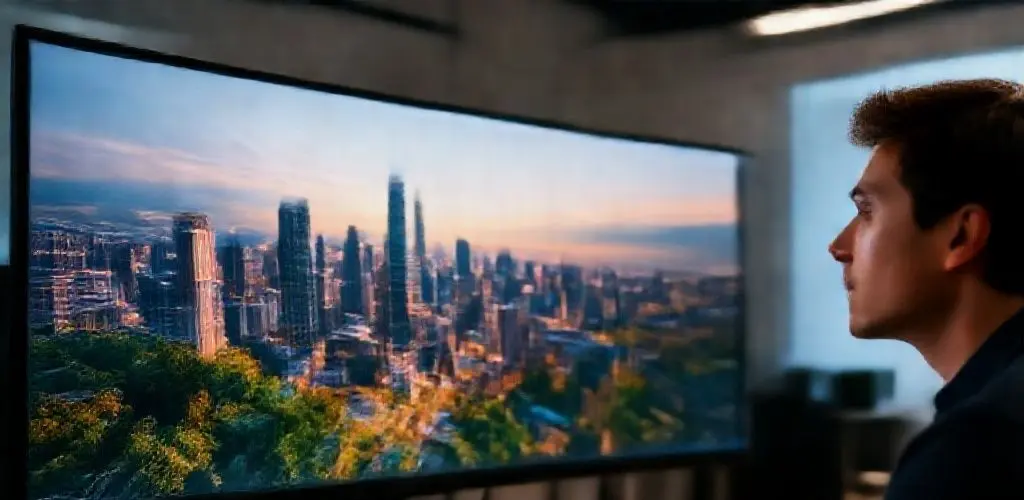
The screen glows with the promise of a story, perfectly rendered, indistinguishable from reality.
The creative professional, once laboriously stitching frames together, now guides an intelligent collaborator, shaping narratives with prompts and vision.
Seedance 2.0 is not just a tool; it is a testament to how profoundly artificial intelligence is reshaping our world, blending the lines between imagination and execution.
Just as ByteDance navigates the complex tides of global commerce and regulation with TikTok, it now spearheads a new wave of AI innovation, reminding us that the digital realm, much like life itself, is an ever-shifting canvas.
The future is not about choosing between human and machine; it is about orchestrating their dance.