
Navigating Identity, Unity, and Political Narratives in India
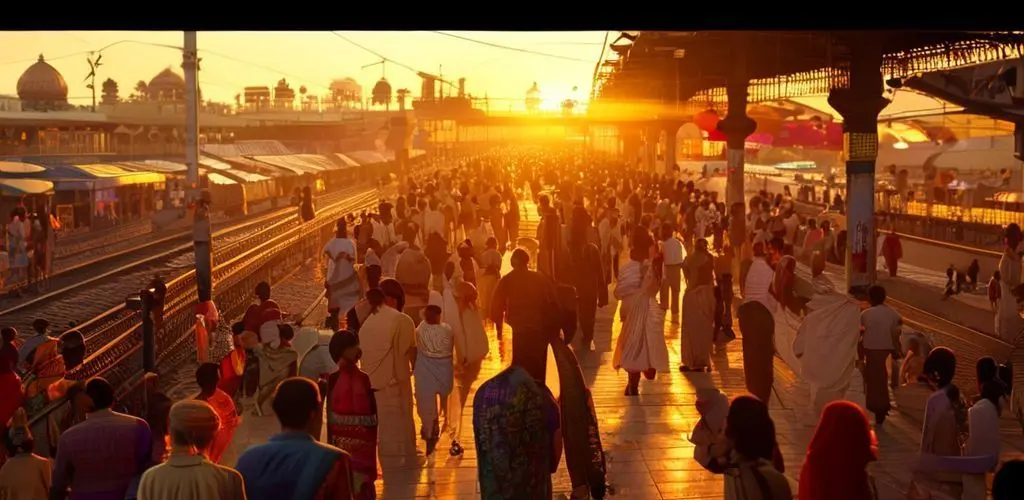
The evening sun was dipping below the horizon, painting the sky in shades of saffron and gold.
I remember sitting on the old wooden bench by the railway station, waiting for the Chennai Express.
The air was thick with the scent of jasmine and filter coffee, a symphony of languages swirling around me – Tamil, Telugu, Kannada, even a smattering of Hindi from fellow travelers.
Each voice, a distinct thread, yet all woven into the vibrant tapestry of India.
In those moments, the idea of “One India, Great India” felt not like a slogan, but a lived experience, tangible and deeply comforting.
It was a simple truth: our differences, rather than dividing us, often make us stronger, richer.
Yet, even in such a setting, the hum of unity can be punctured by the sharp edges of political rhetoric, reminding us that this delicate balance requires constant nurturing and thoughtful engagement.
In Indian politics, discussions often arise regarding the potential for identity markers like regionalism, caste, and language to be leveraged for electoral gain.
Such narratives frequently spark debates about national unity versus diverse regional identities, especially during election cycles.
Why Political Narratives Matter
The political discourse in India, much like anywhere else, is a constant interplay of ideas, aspirations, and, often, strategic accusations.
When political leaders frame opponents as engaging in “separatism” or using identity for electoral gain, it is not merely an exchange of words; it is a narrative being shaped.
While specific, verifiable data on the direct impact of such statements is not always readily available or easily quantifiable, the very nature of such claims holds significant weight.
They tap into deep-seated emotions about national identity, regional pride, and the very fabric of unity, influencing public sentiment around political separatism claims and national cohesion.
Such rhetoric often intensifies in the run-up to elections, where the focus shifts from policy to perception, from governance to identity.
This makes it crucial for citizens and political observers alike to engage critically with the language used.
The real stakes lie in how these narratives resonate with the public, influencing trust, fostering divisions, or, conversely, strengthening collective resolve around issues of national unity and regional identity in India.
Identity as a Political Strategy
At its core, political contention often centers on the alleged manipulation of identity for electoral gain.
Accusations frequently involve political actors indulging in regionalism, casteism, and linguistic chauvinism.
These tactics, when framed by opponents, are suggested to pose a threat to national unity, peace, and stability.
It is a powerful claim, suggesting that tailoring political messages to specific regional, caste, or linguistic groups crosses a line from representation to division.
This highlights the complex interplay of identity politics and national cohesion in India.
The counterintuitive insight here is how deeply rooted identities—pride in one’s language, culture, or community—can become battlegrounds.
What one side champions as celebrating diversity, another might frame as sowing discord.
The strategic inconsistency often implied is that a political approach might vary from state to state, adapting messages to what is believed would yield electoral benefits.
This suggests an underlying tension that, according to critics, undermines national cohesion and fuels discussions around political separatism claims.
Navigating Competing Narratives
Political players often seek to position themselves as true custodians of regional identity, particularly specific cultural elements, while simultaneously accusing others of divisive tactics.
This involves asserting that a government or party has consistently upheld and promoted local culture, language, and identity as an integral part of India’s civilisational ethos.
Sensitivity shown towards specific languages and cultures, even on global platforms, is frequently highlighted as evidence of commitment.
The practical implication is that political parties strategically integrate cultural preservation and promotion into their platforms.
They leverage these actions as a testament to their broader commitment to national unity and respect for diversity, thereby seeking to counter accusations of homogenization or neglect.
This competition shapes the public discourse on regional identity and national belonging, making it essential to critically analyze these electoral narratives.
A Framework for Critical Engagement
Navigating these complex political narratives requires more than just passive consumption.
For anyone keen on understanding the evolving political landscape, a framework for critical engagement is essential:
- Look Beyond the Headline Always delve deeper than initial pronouncements.
Understand the full context of a statement, not just the soundbite.
- Understand the Electoral Context Recognize that many political statements, especially those involving identity, are strategically timed, often in anticipation of elections.
- Assess Claims of National Unity versus Regional Identity Critically evaluate how parties balance these concepts.
Is regional pride being genuinely celebrated or is it being weaponized?
- Evaluate Track Records Carefully When claims about varied approaches are made, consider the historical context and actions of all parties involved, not just the immediate allegation.
- Seek Diverse Perspectives Rarely is a complex issue captured fully by a single narrative.
Engage with various viewpoints to form a more nuanced understanding of the political landscape.
The Peril of Division: Risks and Ethical Considerations
The constant invocation of regionalism, casteism, and linguistic chauvinism, even in the form of accusations, carries inherent risks for Indian identity and national unity.
The most significant among these is the potential for erosion of trust within society and between communities.
When political leaders frame opponents as “separatists” or “threats to national unity,” it can fuel genuine societal fragmentation and hinder the possibility of constructive dialogue.
Such rhetoric can inadvertently normalize divisive language, making it harder to address real issues with a collective spirit.
Ethically, leaders bear a profound responsibility to use language that unites, rather than divides.
While robust political debate is the lifeblood of democracy, crossing into accusations that question the fundamental loyalty or patriotism of an entire political stance can be perilous.
Practical mitigation guidance involves emphasizing shared national values, promoting inclusive language that respects India’s constitutional ideals, and actively discouraging the demonization of political opponents.
A focus on common goals and collaborative problem-solving, rather than identity-based blame games, is paramount for a cohesive nation.
Understanding the Political Landscape: Beyond Metrics
In the realm of political discourse concerning national unity and political separatism claims, measuring “impact” is not always about spreadsheets and KPIs.
Instead, it is about a qualitative understanding of public sentiment and narrative resonance.
While verifiable quantitative data is often scarce in these specific contexts, here is how one might approach assessing such a political landscape:
Public Sentiment Monitoring
Observe the general mood and reactions on social platforms, in local media, and through community discussions.
This informal cadence helps gauge the immediate reception of political statements regarding regional identity.
Rhetoric Analysis
Systematically analyze the language used by political figures.
Look for patterns in accusations, recurring themes (like “separatism” or “cultural attacks”), and how these evolve over time.
Contextual Observation
Continuously place political actions and statements within their broader electoral and social context.
Understanding the “why now” behind a specific accusation provides critical insight into electoral narratives.
The review cadence here is not a quarterly report, but an ongoing, vigilant engagement with the political narratives unfolding.
It is about recognizing that every public statement, especially from influential figures, contributes to the collective understanding of national identity and unity.
FAQ
What types of accusations are often made regarding identity in Indian politics?
Accusations frequently involve political actors allegedly engaging in regionalism, casteism, and linguistic chauvinism for electoral gain, which opponents frame as threats to national unity.
How do political parties typically position themselves on regional identity?
Political parties often seek to present themselves as staunch custodians and promoters of regional culture, language, and identity, while simultaneously accusing their rivals of divisive tactics or neglect.
Why do these discussions about regional identity and national unity intensify?
These discussions often intensify in the run-up to elections, where political parties strategically use such narratives to shape public perception and influence voter behavior around the delicate balance between diverse identities and national cohesion.
Conclusion
The scent of jasmine and filter coffee may still waft through Indian railway stations, a reminder of the nation’s beautiful tapestry of cultures.
But the political landscape, as illuminated by discussions around identity and political separatism claims, serves as a stark reminder of how fragile that unity can sometimes feel.
Accusations of “political separatism” or “attacks on culture” demand more than just a passing glance; they require us to lean in, listen, and critically assess the narratives being spun.
It is a call to remember that while diverse voices are our strength, the language we choose to express them carries immense power.
As citizens, our role is not merely to observe, but to engage thoughtfully, ensuring that the echoes we hear are those of constructive dialogue, rather than corrosive division.
Let us champion the unity that truly binds us.