
The Human Spark: Navigating AI’s Impact on Hollywood’s Creative Heart
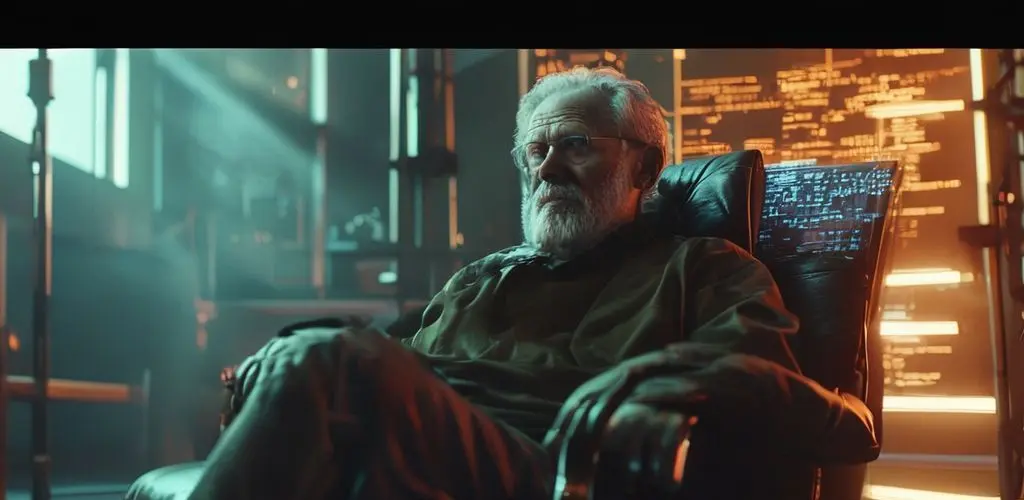
The worn leather of the director’s chair always held a faint scent of old dreams and fresh coffee, a comforting anchor in the whirlwind of a soundstage.
For decades, actors, writers, and crew had gathered, their collective breath creating magic, one frame, one scene at a time.
I recall a quiet morning, the golden hour light spilling through a high window, illuminating dust motes dancing in the air like tiny, hopeful stars.
The script in my hand felt alive, its pages rustling with potential, each word waiting for a human voice, a human gesture, to bring it to life.
This was the essence of the craft: tangible, visceral, profoundly human.
Now, a new kind of hum permeates the industry — not the familiar thrum of generators or the murmur of crew, but the digital pulse of artificial intelligence.
It’s a sound that promises boundless possibilities yet echoes with quiet apprehension.
As this digital tide rises, what happens to the human touch, the irreplaceable spark of authentic performance?
This isn’t just a philosophical debate; it’s a pressing concern, particularly as major players in the entertainment industry forge AI partnerships, demanding vigilant oversight from those dedicated to preserving the human heart of creation.
In short: SAG-AFTRA is vigilantly monitoring the deal between Disney and OpenAI, recognizing its profound implications for human creativity and labor in Hollywood.
This oversight underscores the urgent need for ethical AI integration and robust protections for creative professionals.
Why This Matters Now
The convergence of entertainment giants like Disney and pioneering AI firms such as OpenAI isn’t merely a business transaction; it represents a seismic shift in how content is conceived, produced, and consumed.
We’re stepping into an era where generative AI tools can create breathtaking visuals, mimic voices, and even script narratives, fundamentally altering the landscape of the entertainment industry.
This evolution challenges long-held notions of authorship, performance, and intellectual property.
The question isn’t if AI will transform Hollywood, but how it will be integrated while preserving the value of human artistry.
This matters because the future of work in creative industries hangs in the balance.
The potential for efficiency is undeniable, but the risk of diluting the essence of human creativity, or worse, displacing it, is a genuine concern that requires proactive engagement and robust frameworks.
A Creator’s Dilemma
Imagine a seasoned animator, a painter of dreams with decades of experience, whose hand-drawn characters once graced screens worldwide.
Now, confronted with AI image generators that can produce similar output in moments, they face a profound challenge.
The ethical quandary isn’t whether the AI-generated images are good, but whether the process devalues the human journey of learning, feeling, and expressing that gave birth to the art form.
This scenario highlights a core problem: how do we ensure that AI remains an algorithmic tool that augments human talent, rather than replacing the very humanity it seeks to emulate?
The counterintuitive insight here is that true innovation might not lie in AI’s ability to perfectly replicate, but in its capacity to free human creators for even more complex, emotionally resonant work, provided the guardrails are in place.
What the Research Really Says
The evolving landscape of AI in Hollywood necessitates constant vigilance and informed action.
Our understanding of this complex interplay is shaped by the proactive steps taken by industry stakeholders.
A key finding highlights that SAG-AFTRA is actively monitoring the Disney OpenAI deal (io9, 2025).
This signals a proactive, rather than reactive, stance by labor unions in the face of rapid technological shifts.
For businesses, the practical implication is clear: integrating generative AI must be a process deeply rooted in stakeholder engagement.
Open dialogue with unions and creative professionals is a foundational requirement for sustainable innovation and ethical AI deployment.
Companies that prioritize transparency and collaboration will build trust, fostering an environment where technology and talent can truly thrive together.
This ongoing monitoring also underscores that major entities like Disney and OpenAI are focusing on AI’s role within the entertainment industry.
The trend of AI integration in media is irreversible and accelerating, creating an urgent need for all organizations to develop comprehensive ethical AI frameworks.
These frameworks must resonate with core creative values, safeguard intellectual property, and uphold the dignity of human contribution, embedding a human-first philosophy into AI-driven content creation.
Playbook You Can Use Today
Navigating the AI frontier requires a thoughtful and strategic approach that prioritizes human value alongside technological advancement.
Here’s a playbook for businesses and creative professionals:
- Prioritize Human Oversight: Ensure that human creativity remains at the helm of all AI-assisted projects.
AI should serve as a powerful assistant, not a replacement for human ideation, direction, and final approval.
This directly ties to the core need for organizations like SAG-AFTRA to monitor AI deals, ensuring human agency is protected.
- Engage with Stakeholders Early and Often: Foster open and continuous dialogue with creative professionals, labor unions, and other relevant groups.
Proactive engagement, mirroring SAG-AFTRA’s monitoring of the Disney OpenAI deal (io9, 2025), helps anticipate concerns and collaboratively shape ethical guidelines.
- Develop Robust Ethical AI Frameworks: Establish clear, transparent policies for the use of generative AI in content creation.
These frameworks should address issues of bias, consent, and attribution, aligning with broader AI ethics in media discussions.
- Implement Transparent AI Disclosure: Clearly communicate to audiences and collaborators when and how AI has been utilized in the creation of content.
Transparency builds trust and fosters an informed ecosystem.
- Invest in Human Skill Augmentation: Rather than viewing AI as a threat, invest in training programs that equip human talent with the skills to effectively collaborate with AI tools.
This ensures that the future of work in creative industries involves upskilling, not displacement.
- Review Intellectual Property Safeguards: Work with legal experts to reinforce contractual agreements and licensing models that protect original works and creative rights in the age of AI.
This is a critical consideration for intellectual property in the age of AI.
Risks, Trade-offs, and Ethics
The rapid adoption of AI in Hollywood is not without its perils.
One significant risk is the potential for the devaluation of human creative work, where the ease and speed of AI-generated content might overshadow the nuanced artistry developed over years of human experience.
This could lead to a race to the bottom where quality and originality are sacrificed for expediency.
Another critical trade-off lies in the complex ethical dilemmas concerning ownership and attribution when generative AI creates content based on existing human works, blurring the lines of intellectual property.
Mitigation requires a multi-pronged approach.
First, establishing legally binding contractual agreements that explicitly define the scope of AI use and protect human performers’ rights is paramount.
Second, fostering ongoing, honest dialogue between studios, tech companies, and labor unions ensures that technological progress does not outpace ethical considerations.
Third, investing in educational initiatives for creators to understand and leverage AI tools responsibly can help shape a future where technology enhances, rather than diminishes, human artistry.
The objective is to ensure that AI ethics in media remain at the forefront of every innovation.
Tools, Metrics, and Cadence
For organizations navigating the integration of AI into their creative workflows, a structured approach to tools, metrics, and review cadence is essential.
Recommended Tool Stacks:
- Project Management and Collaboration: Platforms that allow for clear task assignment, version control, and annotation for AI-generated assets, ensuring human oversight and feedback loops.
- Asset Management Systems: Secure repositories for both human-created and AI-generated assets, with robust metadata tagging to track origins, usage rights, and contributor information.
- AI Governance and Audit Tools: Solutions that help monitor AI model performance, identify potential biases, and track adherence to ethical guidelines.
Key Performance Indicators (KPIs):
- Human Creative Input %: Percentage of creative elements (concept, direction, final edit) driven by humans, tracked through project management and peer review.
- Stakeholder Satisfaction: Satisfaction of creative professionals and labor unions with AI policies and use, measured through anonymous surveys and regular feedback sessions.
- Ethical Compliance Audit Frequency: Regularity of internal or external audits for AI use against ethical guidelines, assessed by audit schedule adherence and audit report findings.
- IP Protection Efficacy: Effectiveness of measures safeguarding intellectual property in AI-assisted work, evaluated through legal reviews, incident reports, and licensing agreements.
Review Cadence:
- Weekly: Team stand-ups to discuss AI-assisted project progress and immediate ethical considerations.
- Monthly: Departmental reviews of AI tool effectiveness, human-AI collaboration feedback, and minor policy adjustments.
- Quarterly: Leadership reviews of AI strategy, KPI performance, emerging AI ethics in media trends, and engagement with labor unions.
- Annually: Comprehensive audit of AI governance frameworks, legal reviews of intellectual property policies, and strategic planning for the future of creative collaboration.
FAQ
- How can businesses ethically integrate AI into creative processes?
Ethical integration requires prioritizing human oversight, proactive stakeholder engagement, robust ethical AI frameworks, and transparency in AI use.
- What role do labor unions play in the evolving landscape of AI in entertainment?
Labor unions like SAG-AFTRA play a critical monitoring role, ensuring AI introduction in Hollywood protects human creativity and establishes fair working conditions for creative professionals.
- Why is monitoring AI deals crucial for the future of work in creative industries?
Monitoring AI deals, such as the Disney OpenAI deal, is crucial to proactively address potential impacts on human livelihoods, intellectual property, and the integrity of creative endeavors before widespread adoption.
- What are the core considerations for intellectual property in AI-driven content?
Key IP considerations include defining ownership of AI-generated content, ensuring fair compensation for creators whose work informs AI models, and establishing clear licensing agreements for AI-assisted outputs.
Conclusion
The golden light still spills through the high windows, much as it did that morning I held the living script.
But now, it illuminates not just dust motes, but the shimmering, complex interface of a monitor where human intention meets algorithmic capability.
SAG-AFTRA’s monitoring of the Disney/OpenAI deal (io9, 2025) isn’t merely about protecting jobs; it’s about safeguarding the very soul of the creative process.
It’s about ensuring that as the entertainment industry embraces generative AI, it does so with dignity, with foresight, and with an unwavering commitment to the human spark.
The conversation around AI in Hollywood isn’t a battle between human and machine, but an urgent dialogue about how these two forces can co-exist, enriching each other without one diminishing the other.
The challenge, and indeed the opportunity, lies in defining a future where technology empowers human creativity rather than overshadowing it.
For human creativity to truly thrive amidst AI advancement, vigilance, empathy, and deliberate action are not just ideal—they are essential.
Let’s ensure the story always begins with a human heart.
References
- io9.
SAG-AFTRA Is Keeping an Eye on the Disney/OpenAI Deal.
2025.