
“`html
When Leadership Steps Onto the Floor: NMIA’s New Playbook
The humid morning air at Navi Mumbai International Airport (NMIA) buzzed with a different energy.
Not the usual orchestrated VIP event, but a gentle murmur of profoundly human expectation.
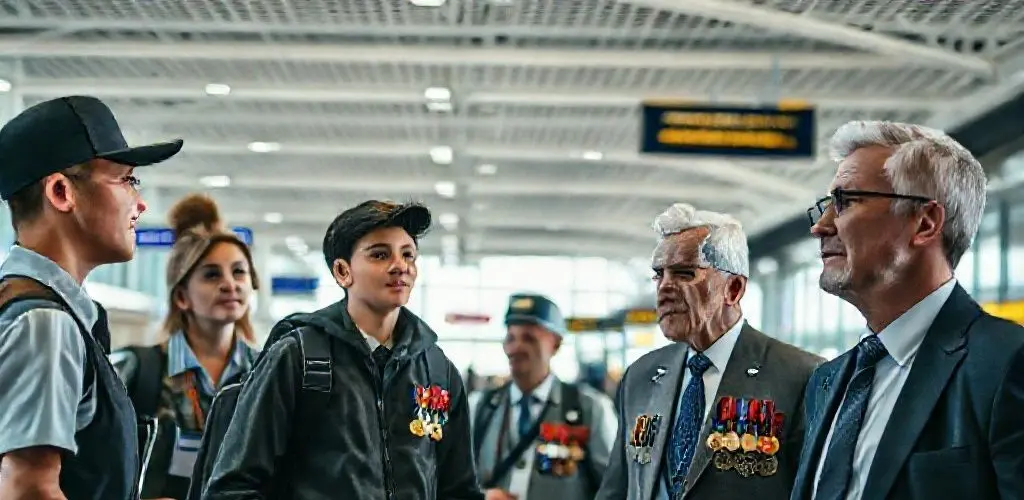
I saw an airport worker, hands showing years of toil, standing shoulder-to-shoulder with a young woman, her eyes wide with first-flight wonder.
Nearby, a decorated war veteran conversed with a sportsperson, both smiling.
This wasn’t a planned photo-op; it was NMIA’s unfolding reality: no roped-off sections, no elevated stages, no visible hierarchy segregating leaders from those they served.
Leadership wasn’t above the moment, but deeply woven into it.
This act of shared space, choosing proximity, subtly redefined leading in an era craving authenticity.
In short: Navi Mumbai International Airport’s opening was a masterclass in modern leadership, prioritizing human connection, shared experience, and visible presence over spectacle, showcasing a new playbook for building trust and authentic institutional culture.
Why This Matters Now
Institutional interaction with stakeholders now dictates public perception more than ever.
Traditional metrics are insufficient; trust is increasingly shaped by observable behavior and genuine connection, not just performance figures, as Fortune India highlights.
This marks a critical juncture for organizations, particularly those with large, public-facing projects.
NMIA’s opening was a deliberate strategic signal.
Leadership’s visible embedding within the experience, directly interacting with workers and flyers, departed from conventional command-and-control optics common in major infrastructure milestones, notes Fortune India.
This impacts institutional perception from day one, laying groundwork for long-term stakeholder trust and public acceptance.
Reimagining the Inauguration: Proximity Over Power
Conventional infrastructure launches involve grand stages, invited elite, and protocol-heavy speeches, with leaders elevated and the public distant—a display of authority.
NMIA, however, chose an “un-inauguration,” eliminating elevation, according to Fortune India.
The counterintuitive insight: true power today isn’t distance; it’s connection and shared experience.
By choosing restraint and presence, NMIA’s leadership suggested a new leadership playbook, shifting the narrative from ownership to stewardship, as Fortune India reported.
An Airport for Everyone, By Everyone
The NMIA opening showcased airport workers alongside Param Vir Chakra awardees, sports icons, and first-time flyers, all welcomed with genuine interaction.
This elimination of visible hierarchy made the airport feel immediately accessible and inclusive.
Collective engagement, like the National Anthem being sung together, created shared belonging, Fortune India highlighted.
This transformed a ceremonial event into a people-led experience, reflecting a vision for the airport as an experience-led public space for everyone.
What the Research Really Says
NMIA’s launch aligns with contemporary understandings of effective leadership and organizational culture.
Leadership Visibility is a Strategic Signal.
Direct leadership presence on the ground communicates commitment, accessibility, and a human-first approach, building trust in an era of skepticism.
Strategies should integrate authentic leadership visibility.
Proximity Fosters Trust and Reduces Perceived Distance.
When leaders are among their people, psychological barriers diminish, fostering shared purpose and mutual respect.
Trust develops through consistent, relatable interaction.
Empower leaders to engage regularly for feedback and empathy.
For further insights, learn more on building trust in the digital age here.
Eliminating Hierarchy Shifts Narrative to Stewardship.
Bringing all contributors into the foreground shifts the leadership narrative from ownership to collective responsibility, as underscored by Fortune India.
Modern leadership gains credibility through inclusion and empathy.
Openings Define Long-Term Cultural Signals.
Initial leadership presence dictates team behavior and public perception long after launch, according to Fortune India.
These cues influence engagement and create enduring cultural blueprints.
Every significant milestone becomes a critical opportunity to broadcast desired values.
A Playbook You Can Use Today
From the NMIA example, leaders cultivating trust and presence can take actionable steps.
Embed, don’t elevate: be present within key moments, engaging with staff and stakeholders.
Prioritize human interaction: design events for direct, unscripted conversations.
De-emphasize visible hierarchy: remove barriers.
Communicate through presence: actions speak louder than speeches; quiet presence is impactful, notes Fortune India.
Foster shared ownership: bring all contributors into the success narrative.
This also impacts employee experience, learn more here.
Risks, Trade-offs, and Ethics
Adopting a human-first leadership poses risks, primarily perceived inauthenticity if visible presence feels staged.
Mitigation demands sincerity: the shift must stem from genuine belief, not just PR.
Consistent follow-through and communicating purpose, framing it as shared values, are crucial.
Another trade-off is perceived diluted authority by some traditionalists, but modern authority shifts from hierarchy to credibility, empathy, and influence.
Tools, Metrics, and Cadence
To implement and measure this leadership playbook, consider specific tools and metrics.
Tools include internal communication for feedback; stakeholder surveys for accessibility/empathy; social listening for public sentiment.
Key Performance Indicators (KPIs): employee engagement scores (target 10-15% increase); stakeholder trust index (target 5-10% improvement within 12 months); media sentiment (majority positive/neutral ‘presence’); Leadership Proximity Index (target 20% increase in informal leader-employee interactions).
Cadence: daily informal check-ins; monthly review of internal comms/social listening; quarterly detailed reviews of engagement/trust index results; post-event debriefs.
FAQ
Common questions: How did NMIA redefine leadership presence?
By choosing proximity, embedding leaders within the opening experience alongside workers/flyers, rather than elevating them, as noted by Fortune India.
Why is leadership visibility important?
It’s a strategic signal, building trust, communicating cultural values, and influencing staff engagement/public perception, observed by Fortune India.
What is the impact of eliminating hierarchy?
It shifts the narrative from ownership to stewardship, fostering shared responsibility and collective engagement, echoed by Fortune India.
Learn more about strategic communication in mega-projects here.
Conclusion
The opening of Navi Mumbai International Airport was a quiet, yet profoundly impactful, leadership statement.
It reminded us that grandest achievements are best celebrated not with spectacle, but with shared humanity.
By choosing to step onto the floor, to be present among the people who built and will use it, NMIA’s leadership offered a glimpse into a new leadership playbook—one where influence flows not from the top down, but from the ground up.
In a world yearning for genuine connection, this act of visible presence is the very foundation of lasting trust.
Explore the world of business like never before with the Fortune India app.
From breaking news to in-depth features, experience it all in one place.
Download Now.
References
Fortune India. “When Leadership Steps Onto the Floor: What NMIA’s Opening Says About a New Leadership Playbook.”
“`