
“`html
Meta’s acquisition of AI-wearables startup Limitless signals a significant pivot towards AI-enabled consumer hardware.
The aroma of freshly brewed chai still lingered, a comfort I associate with deep conversations.
Catching up with a colleague, I paused, searching for a client’s name, one lodged just beyond reach.
My colleague smiled, offering a gentle prompt.
It was a small, human moment, a testament to our organic memory’s beautiful imperfection.
But what if, in that instant, a quiet voice had whispered the name?
What if every important detail was instantly recallable, neatly cataloged, and searchable?
This fleeting space between human memory and digital augmentation is a world both promising and complex.
Meta is now hurtling towards it, aiming to redefine how we remember, interact, and even think.
The pursuit of augmented memory and personal superintelligence is upon us, bringing remarkable potential and fresh ethical quandaries.
In short: This move accelerates Meta’s personal superintelligence vision, integrating conversational AI and augmented memory into everyday devices.
Implications for privacy and user trust are paramount.
Why This Matters Now: The Race for Augmented Intelligence
Personal technology is rapidly shifting, moving beyond screens to devices seamlessly blending into our lives.
Meta recently announced a vision to bring personal superintelligence to everyone, building incredible AI-enabled wearables.
This is no longer just about virtual reality; it is embedding artificial intelligence directly into our daily experience.
This strategic direction crystallized with Meta’s acquisition of AI-wearables startup Limitless in December 2023, as reported by Reuters.
Limitless, a pioneer, had raised over $33 million USD prior to the acquisition, showcasing significant investor confidence, Reuters reported in 2023.
This move signals Meta’s commitment to leading a new generation of smart devices that interact more directly with daily life, potentially challenging existing tech paradigms.
The Core Problem: Beyond Human Recall
Our brains are magnificent, yet imperfect recorders.
Names slip, meeting details fade, and daily information volume can be overwhelming.
This memory gap is a core problem AI wearables like the Limitless pendant seek to address, promising everyday productivity and enhanced recall.
The counterintuitive insight is that while we crave seamless information access, offloading memory might subtly shift our cognitive relationship with recall.
It raises questions about what it truly means to remember, and where self and machine boundaries blur.
A Glimpse at Augmented Memory in Action
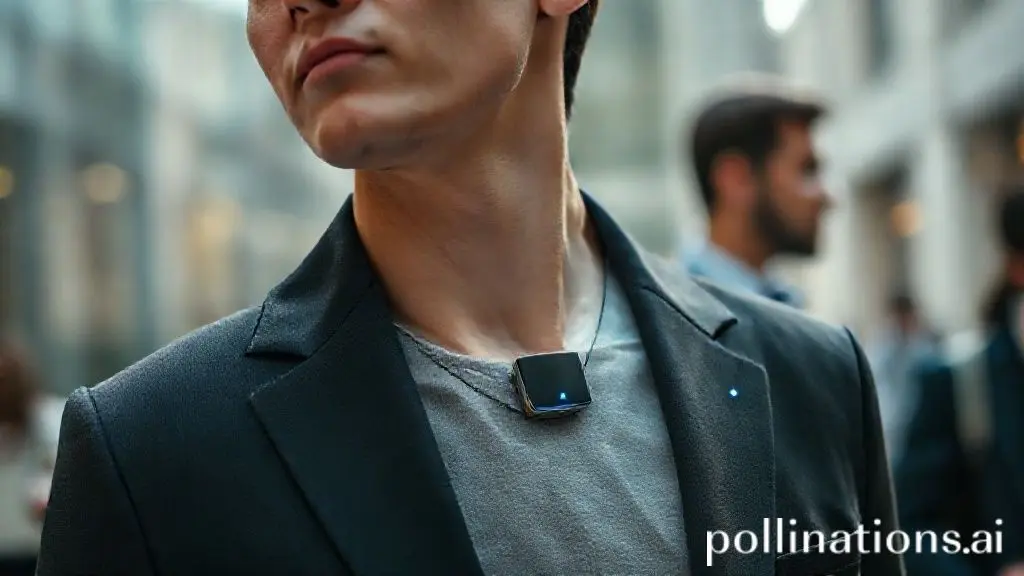
Consider the Limitless device: a pendant-style wearable discreetly clipping to clothing.
This innovative pendant device records real-world conversations, generating transcripts and searchable summaries via a companion app, according to Reuters in 2023.
Imagine leaving a crucial client meeting with an AI-powered summary of every key decision, or instantly recalling a forgotten detail from months ago.
This technology epitomizes conversational AI applied to personal augmentation, making Limitless a tangible example of AI assistants designed to augment memory and everyday productivity.
What the Research Really Says: Meta’s Strategic Play
Meta’s move into AI hardware and AI wearables is a calculated acceleration of a profound strategic vision.
Data clearly outlines this acquisition’s meaning for personal technology’s future.
Meta’s strategic focus on AI-enabled consumer hardware aims to integrate advanced AI into wearable technology, signifying a major investment in next-generation devices beyond VR and AR, Reuters reported in 2023.
This acquisition establishes Meta as a leader in always-on, intelligent personal companions.
Businesses and developers should prepare for a new frontier of ambient, voice-driven user interaction, rethinking user experience design and privacy-by-design.
Limitless’s pioneering role in new form factors and functionalities means they developed a wearable device capable of recording and transcribing real-world conversations, as reported by Reuters in 2023.
This acquisition provides Meta with immediate capabilities in conversational AI and a proven wearable form factor, accelerating their product roadmap.
Competitors will likely intensify R&D in AI wearables, creating a more crowded market for augmented memory and personal superintelligence solutions.
The acquisition of talent and technology is crucial, as Limitless co-founder and CEO Dan Siroker shared in a blog post cited by Reuters in 2023, stating they would be joining Meta to help bring their shared vision to life.
Meta is integrating key expertise and intellectual property to accelerate internal development.
Specialized tech talent in AI hardware and conversational AI will be in high demand, intensifying talent wars.
Organizations must consider nurturing or acquiring these skills.
A Playbook You Can Use Today: Navigating the AI Wearable Wave
For businesses looking to understand or integrate this emerging landscape, here is a playbook grounded in Meta’s shifts:
- Prioritize Human-Centric AI Design.
Focus on how AI wearables genuinely augment human capabilities, rather than replacing them.
Ensure the technology feels like an extension, not an intrusion.
- Develop a Robust Data Privacy Framework.
Proactive measures are critical.
As with Limitless’s existing users needing to accept revised privacy terms, Reuters reported in 2023, transparency and user control will be paramount.
- Invest in Conversational AI Expertise.
Natural language processing (NLP) will be the backbone of next-generation devices.
Build or partner for strong NLP capabilities.
- Explore Ambient Computing Interfaces.
Think beyond touchscreens.
Consider how your services can be accessed through voice, subtle gestures, or context-aware AI.
- Cultivate an Ethical AI Stance.
Establish clear guidelines for data usage, consent, and potential societal impact of always-on recording devices.
Your brand’s trustworthiness will depend on it.
Consult frameworks like those from the National Institute of Standards and Technology (NIST).
- Monitor Early Adopter Feedback.
Engage with users of new AI wearables to understand real-world use cases, pain points, and ethical concerns before mass market adoption.
Risks, Trade-offs, and Ethics: The Fine Line
Meta’s venture into AI wearables presents personal superintelligence, yet carries significant ethical weight.
Devices constantly recording conversations—whether to augment memory or for everyday productivity—raise fundamental questions about data privacy and surveillance.
The core conflict lies between technological advancement and user privacy.
For existing Limitless users, the need to accept revised privacy terms underscores the shifting landscape of data control with AI-enabled wearables, Reuters reported in 2023.
Mitigation Guidance:
- Transparent Consent.
Make data collection practices undeniably clear and easily configurable by the user.
- Purpose Limitation.
Define and adhere to strict boundaries on how recorded data is used, ensuring it serves only the stated user benefit.
- Robust Security.
Implement industry-leading encryption and data protection protocols to safeguard highly sensitive personal conversations.
Refer to guidance from leading cybersecurity authorities for best practices.
- User Control.
Empower users with granular control over what is recorded, stored, and shared, including easy deletion options.
Tools, Metrics, and Cadence for Ethical AI
To navigate this complex space, organizations need dedicated tools and a consistent review cadence focused on trust and ethical use.
Recommended Tool Stacks:
- AI Ethics Frameworks.
Implement tools that audit AI systems for bias, fairness, and transparency, such as IBM AI Fairness 360.
- Data Governance Platforms.
Solutions for managing data lifecycle, GDPR compliance, and user consent management.
- Sentiment Analysis and Feedback Loops.
Tools to gather and analyze user feedback regarding privacy concerns, utility, and experience with AI wearables.
Key Performance Indicators (KPIs):
Measuring success involves tracking metrics beyond adoption.
KPIs include a user trust score (gauging perceived trustworthiness of AI features), a data privacy compliance rate (ensuring adherence to internal and external regulations), a feature adoption rate (tracking users engaging with core AI features), privacy settings engagement (monitoring how often users review or adjust privacy settings), and incident response time (measuring time to address breaches or ethical concerns).
Review Cadence:
- Weekly.
Monitor user feedback and sentiment analysis for immediate issues.
- Monthly.
Review privacy settings engagement and feature adoption data.
- Quarterly.
Conduct comprehensive ethical AI audits and data privacy compliance checks, updating policies as needed.
- Annually.
Host a public transparency report on AI usage and data practices.
FAQ: Your Burning Questions Answered
- What is Limitless, the AI-wearables startup Meta acquired?
Limitless is an AI-wearables startup that developed a pendant device capable of recording and transcribing real-world conversations and producing searchable summaries via a companion app.
- Why did Meta acquire Limitless?
Meta acquired Limitless to accelerate its work on building AI-enabled wearables, aligning with its vision to bring personal superintelligence to everyone through advanced AI-enabled consumer hardware.
- What will happen to existing Limitless users after the Meta acquisition?
Meta and Limitless will continue to support existing users, but the company will stop selling new devices.
Existing users will need to accept revised privacy terms to maintain their service.
Conclusion: The Human Heart of Superintelligence
The memory of struggling for that client’s name now feels like a quaint echo from a bygone era, perhaps soon digitized.
Meta’s acquisition of Limitless is not merely a tech headline; it is a tangible step into a future where personal superintelligence becomes an ever-present companion.
This bold move underscores the accelerating pace of tech acquisitions in the pursuit of AI hardware dominance.
Yet, as we embrace augmented memory and seamless connectivity, we must remember the human heart of it all.
The genuine warmth of a shared smile, patience in a colleague’s gaze, the inherent dignity in our authentic, sometimes imperfect, human experience.
These are what AI should enhance, not overshadow.
The future of AI wearables rests not just on intelligence, but on wisdom – the wisdom to wield such power with integrity, empathy, and a steadfast commitment to humanity’s best interests.
Trust, like the quiet hum of a well-calibrated machine, will be the most valuable currency.
References
- Reuters. Meta acquires AI-wearables startup Limitless. 2023. reuters.com/business/meta-acquires-ai-wearables-startup-limitless-2023-12-05/>
“`